Blog
When optimization gets practical
Customer stories, technical guides, and deep dives into 3D content optimization pipelines.
Categories
Tags
Search results
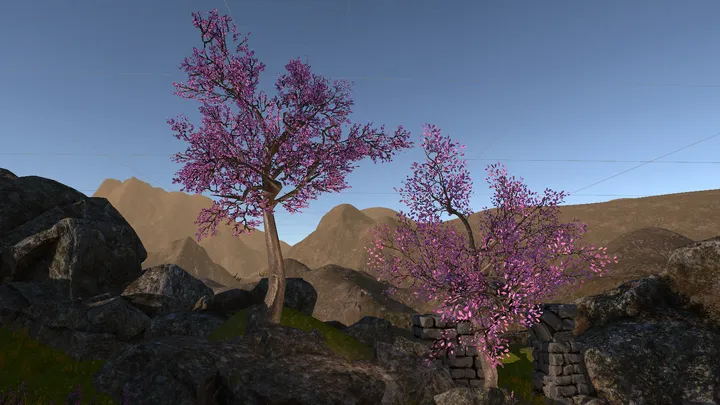
Rendering vegetation imposters
In this blog post we will look at two shading tricks that will increase visual quality of vegetation impostors; fading of orthogonal planes and noising of normals.

Aggregate StaticMeshActors in Unreal Engine using the Simplygon Subsystem and Python
In this blog we will have a first look at the new Simplygon Subsystem import and export API for Unreal Engine and how to use it using Python. We will use it to aggregate and remove internal geometry of a collection of Static Mesh Actors.
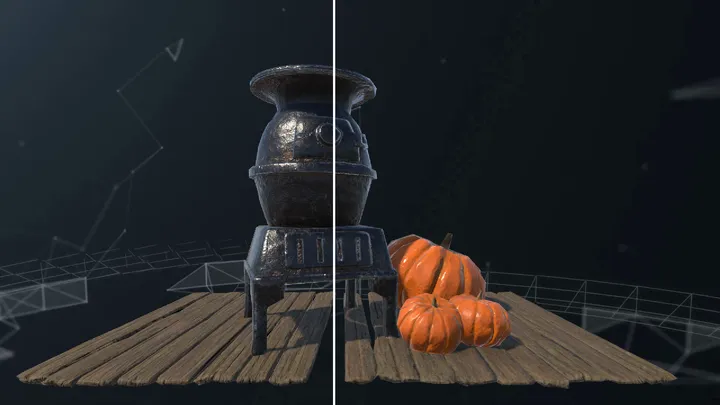
Custom texture casting in Unity
In this post we will look at how to cast textures for custom shaders in Unity using compute casters. This is very useful if you have non-standard shaders that use custom texture channels.

What's new in Simplygon 10.4
We are proud to present our next major release. Simplygon 10.4 comes with improvements to the quad reducer, small parts remover and tessellated attributes. It also adds support for Unreal Engine 5.5, Maya 2025 and Blender 4.2.

Scripting with Simplygon: A Framework
In this post, we will explore a scripting framework that allows you to extend the functionality of Simplygon objects in Python. This framework will provide you with a starting point to create a library of helpful functions, enabling you to quickly iterate as you refine your asset pipeline. The approach we will discuss is a seamless extension to Simplygon that allows you to add functionality as needed, without requiring a significant time investment upfront.
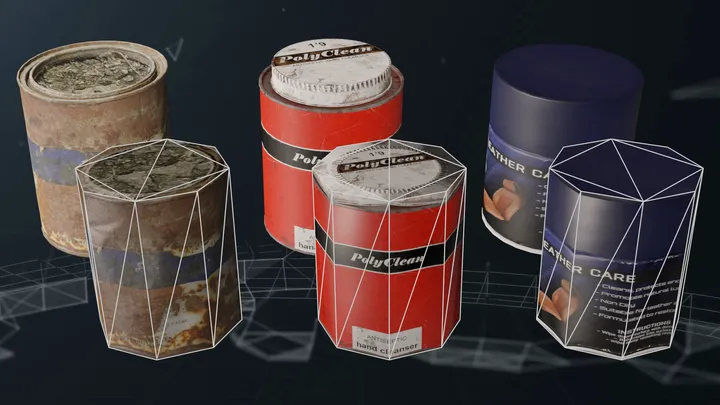
Reuse proxy models with surface mapper
In this blog we'll showcase how the surface mapper enables reusing the same model as LOD levels for multiple models with different topology. It also showcase how you can bake materials to an self supplied proxy model.

Protecting selected materials
In this blog post, we will guide you through the art of safeguarding specific materials during mesh reduction. Imagine scenarios where preserving intricate details, such as character faces or dynamic materials like cloth, is crucial to maintaining the overall visual appeal of your 3D models.
Simple Maya script
In this post, we'll guide you through using Simplygon's scripting support in Maya to transfer data from Maya to Simplygon, run a process, and bring the results back into Maya. This tutorial will provide a solid foundation for applying tips and tricks from other blogs directly within Maya.

A tool for optimizing distant meshes in Unity
In this blog we'll create a Unity tool similar to our Unreal Engine plugin's Stand-In feature. It can be of great use to optimize objects in backgrounds of video games.

Optimize Unreal Engine levels with visibility culled Stand-Ins
This blog will cover how to use Stand-Ins in Unreal Engine to replace distant meshes with simple proxy meshes. We will use visibility culling to cull away any geometry not visible from the player's perspective.

Scripting with Simplygon: Introduction
This is the first of a series of posts where we dig deeper into how to script with Simplygon. In this post we will explore four levels of scripting depth, discussing the advantages and disadvantages of each approach.

Vertex locks in Unity
In this blog we'll showcase how to use vertex locks in Unity to protect areas during optimization. We do this by editing the Simplygon scene after export from Unity.
No posts match your filters
Try a different keyword, or clear the active filters to see every post.