Blog
When optimization gets practical
Customer stories, technical guides, and deep dives into 3D content optimization pipelines.
Categories
Tags
Search results
Automating your asset pipeline
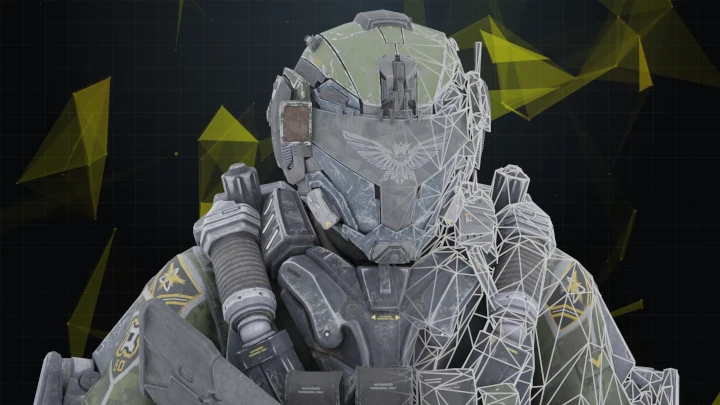
This blog post describes how to optimize content using Simplygon's SDK for various platforms with automation. It includes a guide on creating an LOD chain in Maya and scripting it for multiple assets, and highlights the benefits of using screen size optimization. The post also gives suggestions for further challenges to tackle in the pipeline.
Introducing our high density reducer
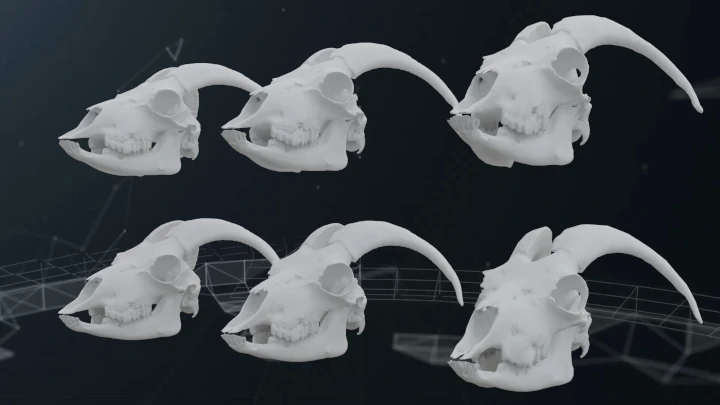
In this post we will take a look at the new high density reducer we introduced in Simplygon 10.1. It's main intention is to be used with very high poly sculpted models and 3d scanned assets. We are going to compare the process quality and time to our ordinary reducer.
What's new in Simplygon 10.1
In Simplygon 10.1 we have focused on improving the new features added in 10.0, as well as adding new exciting features. The headline of the release is definately shader casting which we hope will make it much easier for developers to bake materials and textures. We have also added a high density reducer to tackle very high poly scanned and sculpted meshes.

Reuse skeletons for Unity LODGroup
In this holiday themed blog post we'll showcase how to reuse skeletons for different LOD levels in Unity. As an extra spice we will also throw in Bone Reduction for our last LOD level.
Troubleshooting gamma issues
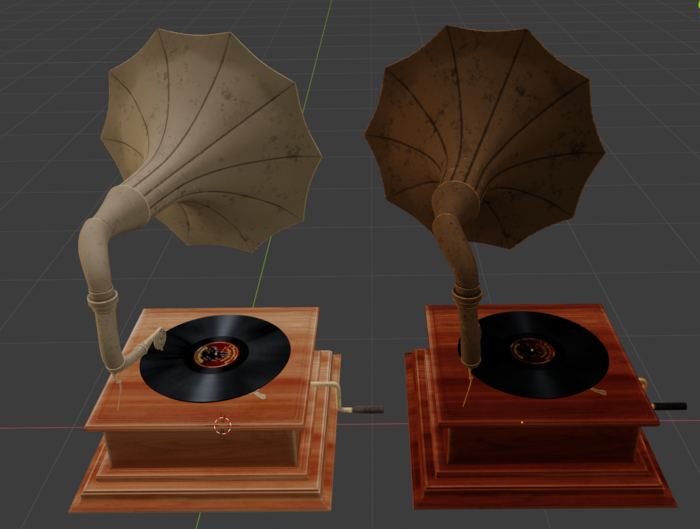
If you have processed assets in Simplygon and the output had another color shade, then this post is for you. In this post we'll go through how to detect and solve gamma issues.
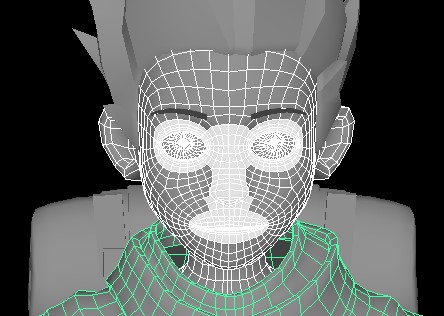
Protecting features using vertex locks and weights
Sometimes you want the ability to protect certain features in your assets. Simplygon provides you with the ability to use either vertex weights or locks to direct the optimization process to keep polygons where you want.

Bake decals into surfaces
In this spooky blog post we will optimize away spider web decals from a scene. While it might seem unfitting given the release date of this post it is a well-known fact that most of the spider webs being displayed are not real and just for decoration.
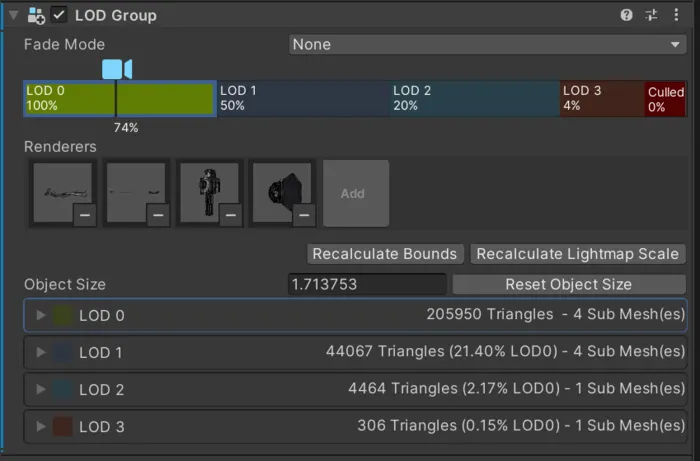
Using Simplygon with Unity LODGroups
This post will showcase how we can use Simplygon to generate LOD levels to populate Unity's LODGroup component. We are going to use cascaded reduction pipelines with screen size as stop criteria. This means we can think of LOD transitions in terms of visual difference instead of polygon count and distance to camera.

Simplygon supporting NVIDIA's new Micro-Mesh technology
With NVIDIA's new Micro-Mesh technology, developers will be able to continue their quest to fill their worlds with content. The technology removes many of the traditional bottlenecks, releasing creators from many of the shackles that previous generation hardware had put on them. We at Simplygon have been working closely with NVIDIA to ensure that can use our SDK to transform your meshes to be ready for your Micro-Mesh render pipeline.
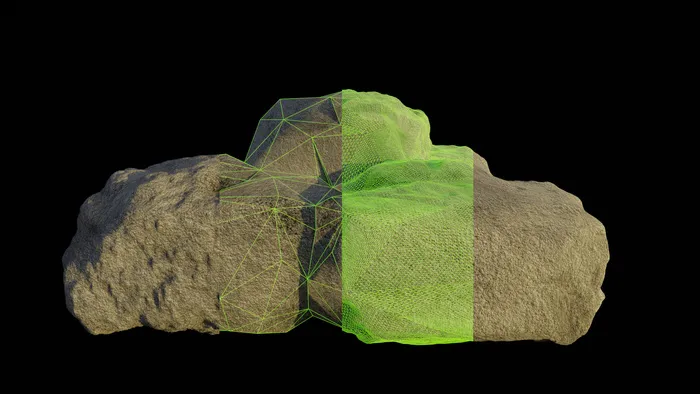
Accelerated remeshing using tessellated attributes
With Simplygon 10.0 we introduced tessellated attributes. In this post we'll showcase how to use them to speed up high resolution remeshings where we only care about surface details.

Optimizing assets made of both quads and triangles
In this post we'll showcase how to reduce meshes containing both quads and triangles. We are going to use both the triangle reducer and new quad reducer along with vertex locks.
What's new in Simplygon 10
The Simplygon 10 release brings a couple of real hero features to the game. In this version we have added a quad reducer and processor that helps with protecting seams when optimizing modular content.
No posts match your filters
Try a different keyword, or clear the active filters to see every post.