
Customer story: Scaling Forza Horizon 6 with Simplygon

Written by Kieren Hutchison, Senior Technical Artist, Playground Games
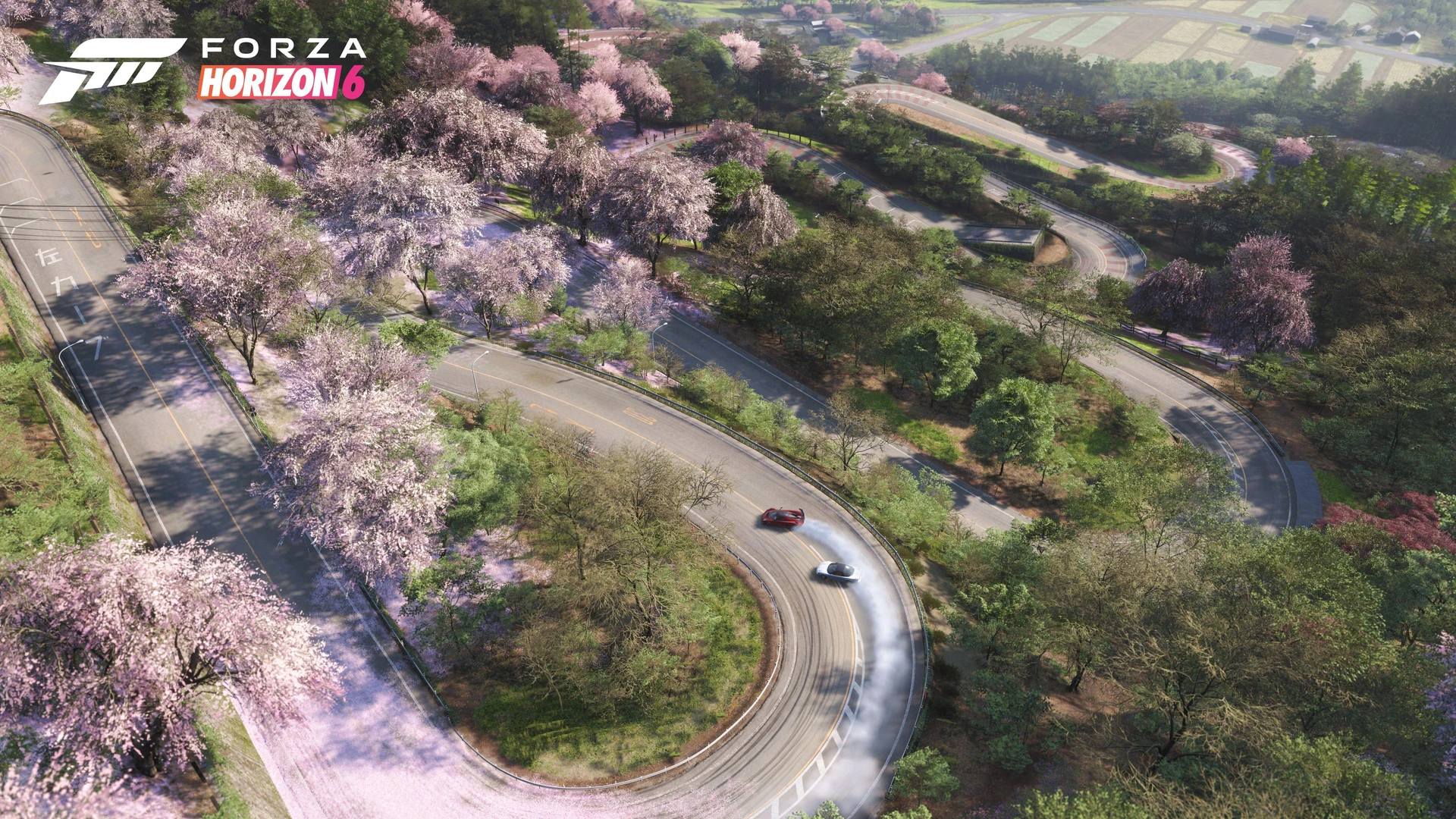
Forza Horizon 6 welcomes players to Japan: a location of striking contrasts, where rural landscapes, mountain roads, wooded regions, industrial districts, and the iconic streets of Tokyo City come together in one spectacular driving experience.
Playground Games has a long history of crafting beautiful open world racing games. For Forza Horizon 6, the goal was to push things further, creating a more layered and detailed open-world that could hold up visually at high speed and across expansive distances.
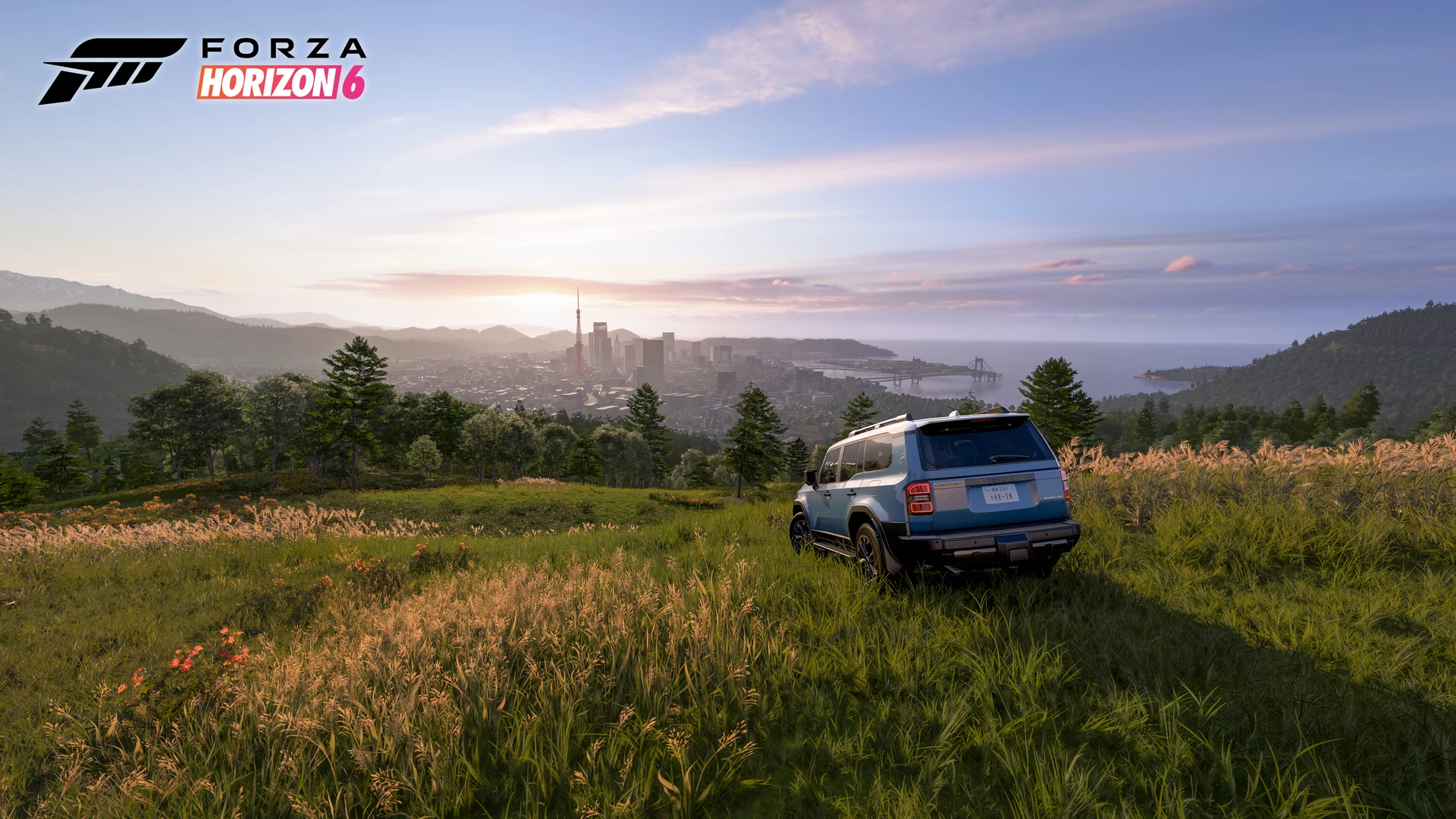
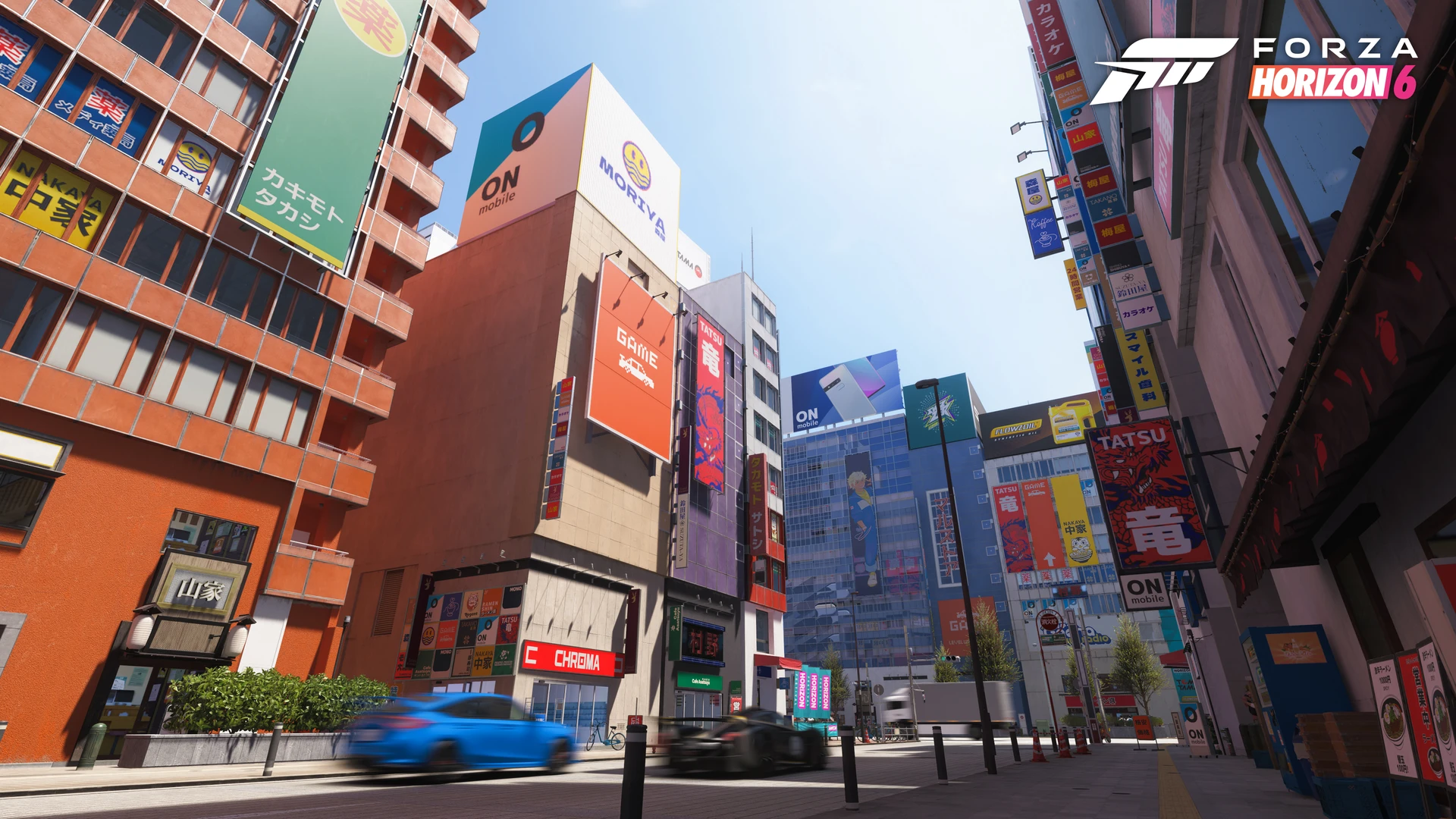
That created a major production challenge. Tokyo City - the largest urban area ever built for a Forza Horizon game. It needed to convey a strong sense of scale while remaining visually coherent and instantly readable at speed, from suburban roads and downtown streets to docks, industrial districts, elevated routes, and glowing skyline views.
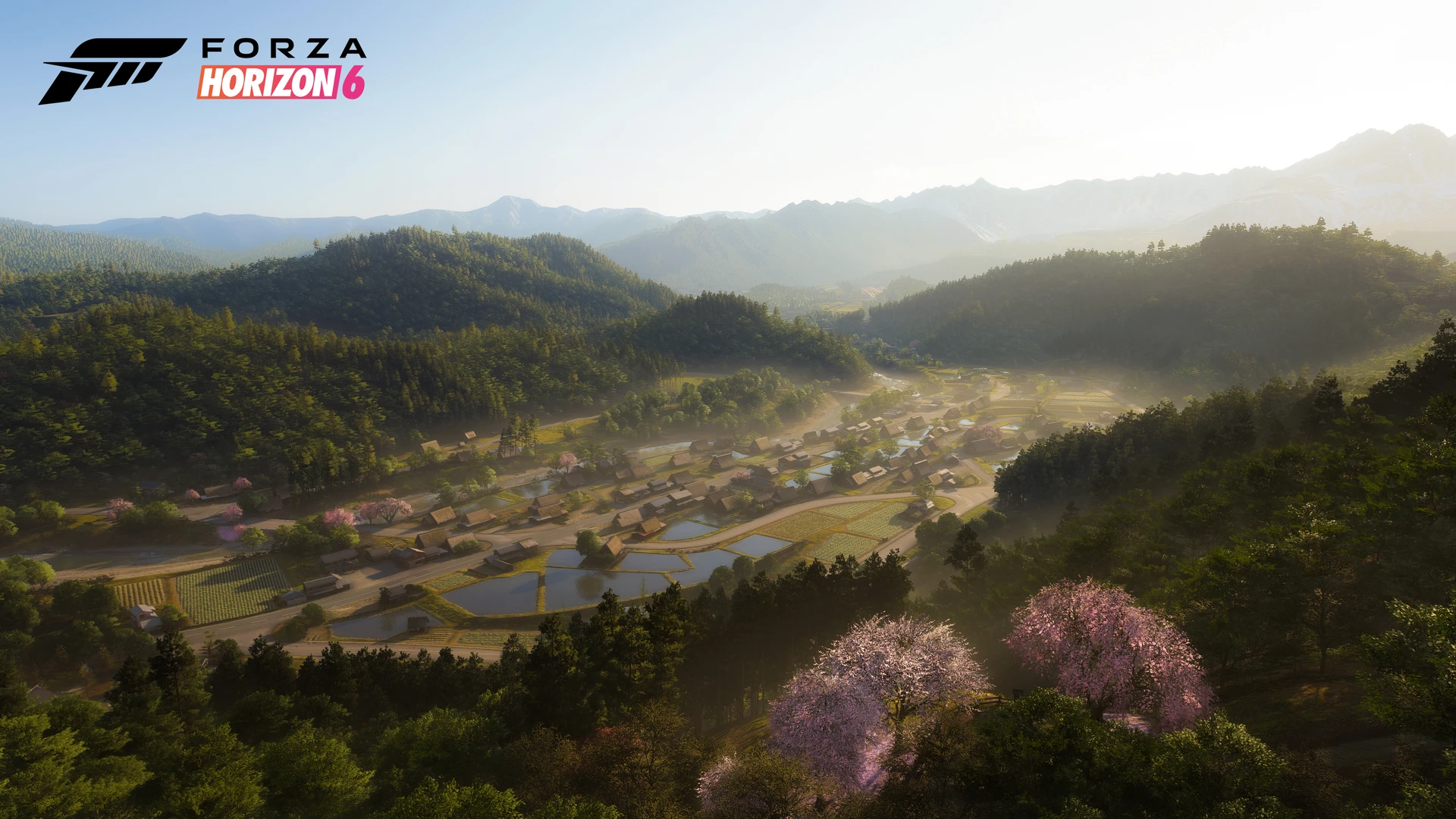
Forests also needed greater depth and coverage than in previous Horizon worlds, helping Japanʼs woodland roads, mountain routes, and distant vistas feel natural and atmospheric. Across Horizonʼs version of Japan, the world needed to remain visually convincing while still fitting within strict memory and performance budgets.
Simplygon became an important enabling technology in achieving that goal, supporting Playground Gamesʼ technical art and content teams across three key areas: Hierarchical Level of Detail, Projection Level of Detail, and Impostor Baking.
Building Tokyo City at Horizon scale
Tokyo City was one of the biggest technical and artistic drivers for Forza Horizon 6. Building it was only part of the challenge. It also needed to remain convincing from every angle: close-up at street level, across elevated roads, through industrial districts, and in the long-range skyline views that help define Horizonʼs Japan.
Simplygon supported this through Hierarchical Level of Detail, or HLOD, workflows. HLODs allow larger groups of world content to be combined and simplified into efficient distant representations, helping complex areas remain practical to render once individual source assets no longer need to be displayed at full detail.
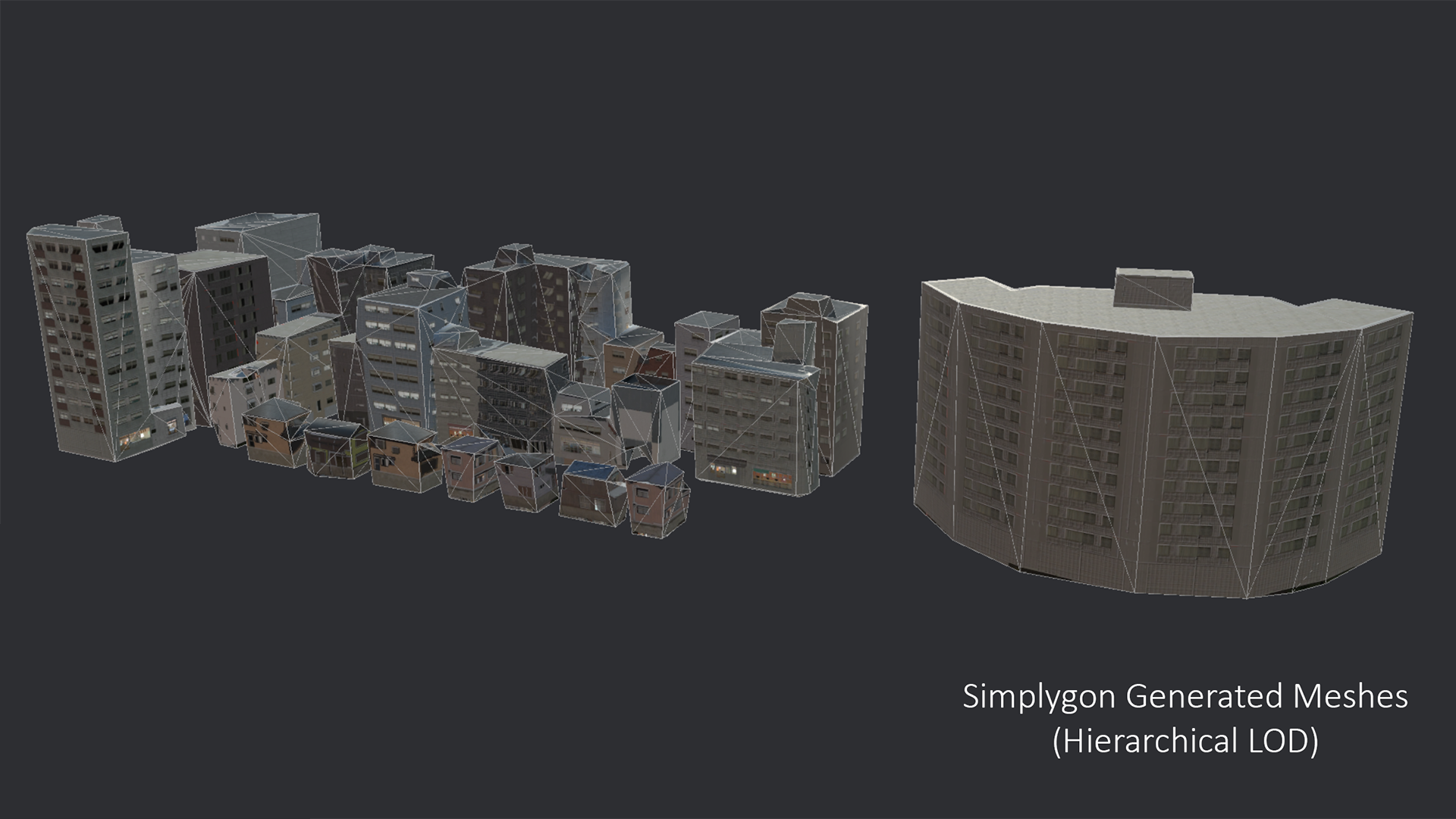
For Tokyo City, this helped larger sections of content read clearly at distance while reducing the cost of rendering them. As players looked across the city, drove along elevated routes, or moved quickly between enclosed streets and wider vistas, HLODs helped preserve the overall shape and presence of the city without carrying the full cost of close-up assets.
This gave Playground Games a stronger foundation for city optimisation. Artists and technical artists could continue to define the quality bar, review results in context, and decide where additional control was needed, while Simplygon made large, interconnected sections of the city more practical to process at scale.
Creating distant world detail with PLODs
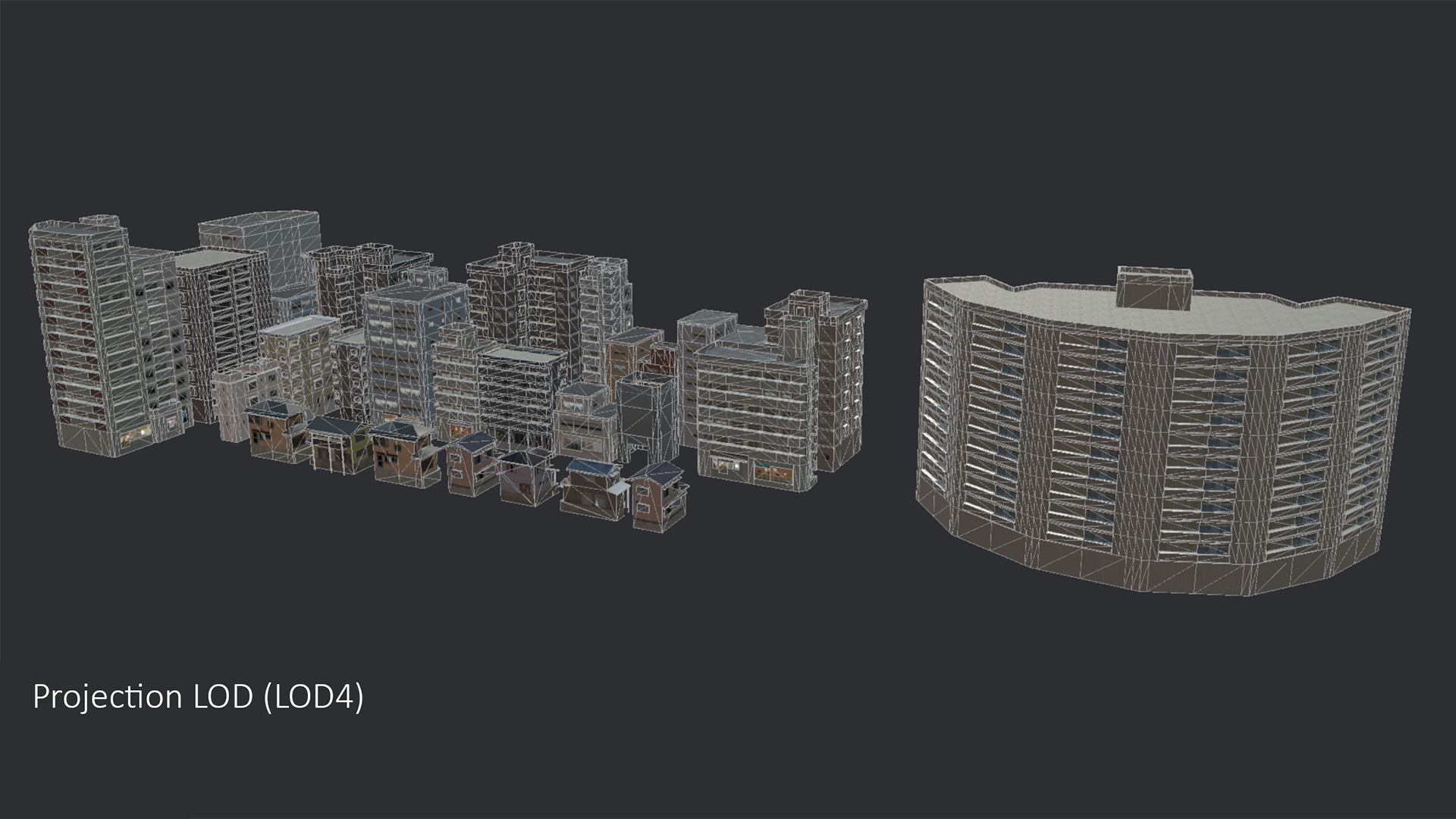
Alongside HLODs, Simplygon supported Projection Level of Detail, or PLOD, workflows. PLODs provided lighter-weight versions of content where full-detail geometry was no longer needed, while still preserving the broad shape, material impression, and visual identity of the source asset.
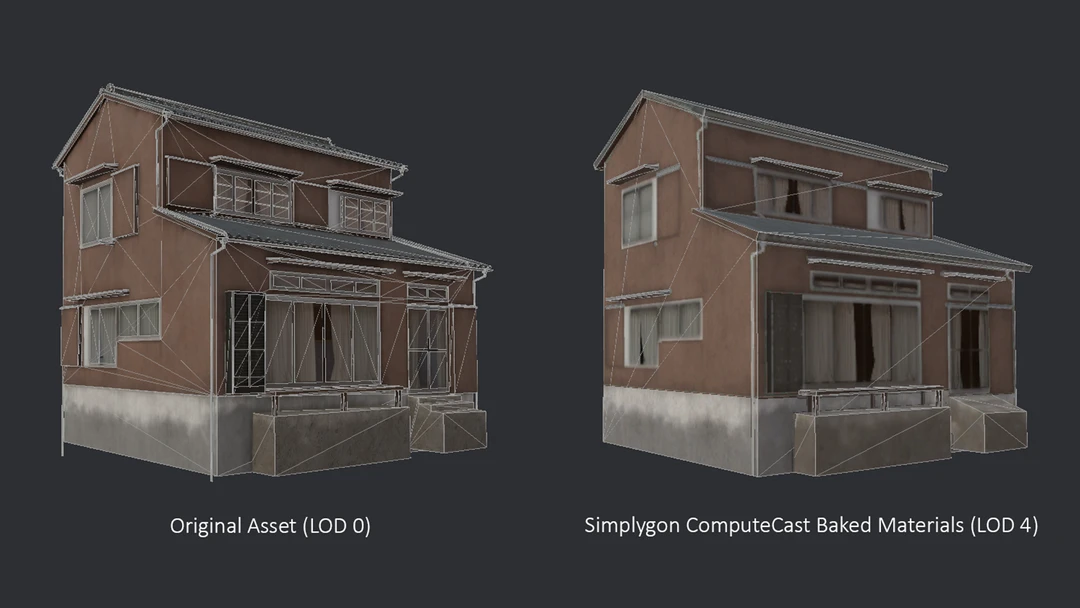
For a location such as Japan, this was especially important. Buildings, street furniture, environment modules, and larger world assets continued to shape the feeling of the map even after they move beyond close-up viewing range. In a city biome, distant assets still contribute to the skyline, lighting composition, and perception of scale. Simplygon allowed the team to create these simplified representations with projected materials through a more consistent workflow. Rather than relying entirely on hand-built distant assets, Playground Games could incorporate Simplygon into a broader production pipeline that balanced visual quality, memory cost, runtime performance, and authoring time.
Scaling forests for high-speed traversal
Beyond Tokyo City, Japanʼs forests and mountain biomes needed to feel equally rich and carefully composed. This placed a high bar on foliage, with greater depth, coverage, and visual continuity required to keep the landscape convincing during high-speed traversal.
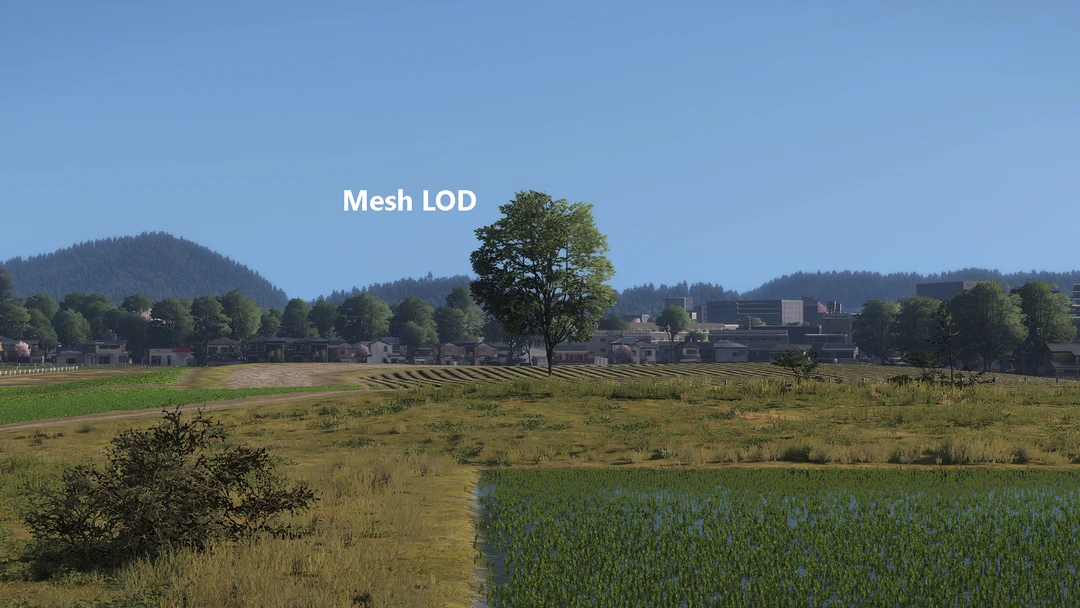
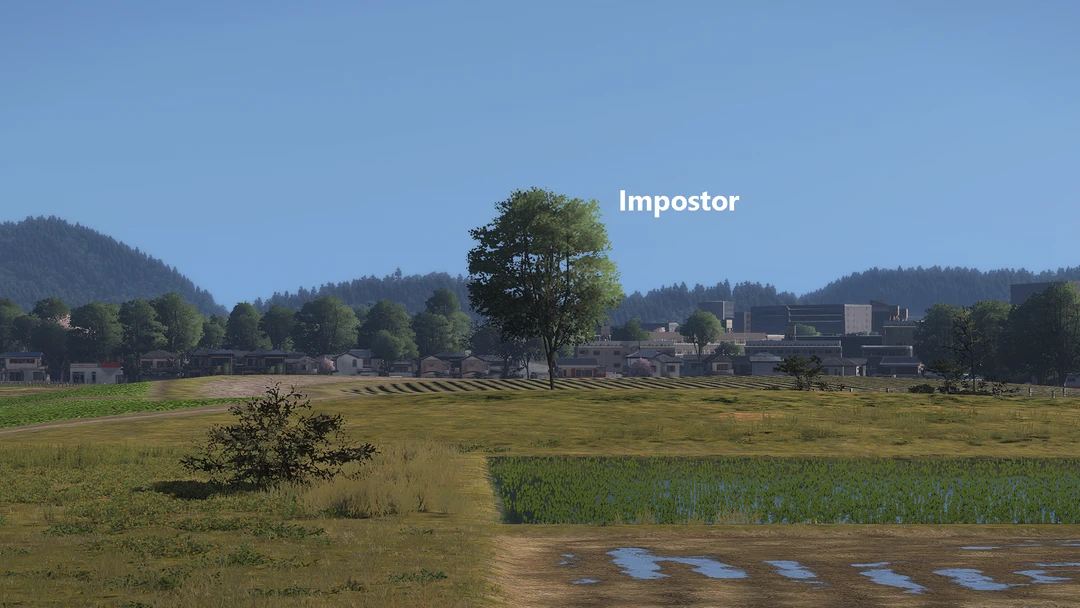
Distant tree representation was especially important. In a high-speed racing game, players move through transition ranges quickly, and trees can remain visually prominent even when they are far enough away that rendering the original geometry is no longer practical. Silhouette, colour, shading, and the stability of transitions all needed to hold up as scenery moved rapidly across the screen.
Simplygon supported this through Impostor Baking. Impostors replace complex tree geometry with lightweight, view dependent representations that preserve the appearance of the source asset from a range of angles. This allowed distant forests to retain their shape and visual density without carrying the full rendering and memory cost of the original trees.
The workflow gave technical artists control over the balance between appearance and cost. View count, atlas resolution, capture framing, transition distance, and memory footprint could all be tuned to suit different tree types and viewing conditions. By making this process repeatable across a large foliage library, Simplygon helped the team support broader forest coverage while maintaining consistent results.
Supporting the vision of Horizonʼs Japan
As the scope of Forza Horizon 6ʼs world grew, Simplygon became an important part of how Playground Games approached optimisation across the world. Through HLODs, PLODs, and Impostor Baking, it gave the team repeatable ways to process a wide range of content, providing artists and technical artists with a stronger foundation for balancing visual quality, memory, performance, and authoring time.
From Tokyo Cityʼs skyline to Japanʼs forests, mountains, and long-distance vistas, Simplygon contributed to a world designed to be explored at speed. It helped Playground Games manage the complexity behind Forza Horizon 6 while preserving the breadth and visual ambition of the final experience.